top of page

Strange St. Louis 

Looking for unusual places to visit in St. Louis? Strange St. Louis explores the hidden history, forgotten landmarks, ancient sites, brewery caves, strange landscapes, and local legends scattered across the city and surrounding region.

Some are famous. Others are hiding in plain sight. Explore the places below to discover what happened there, what remains today, and what you can still visit.
Browse by Category

Anheuser-Busch Brewery

The Anheuser-Busch brewery in Soulard is more than a factory. Its enormous brick complex preserves the architecture, technology and family ambition that made St. Louis synonymous with American brewing.

Bellefontaine Cemetery and Arboretum

Bellefontaine is part cemetery, part architectural museum and part arboretum—a 314-acre record of St. Louis history shaped in part by the city's devastating 1849 cholera epidemic.

Benton Park's Lost Cholera Cemetery

Benton Park's peaceful landscape sits within a neighborhood deeply connected to nineteenth-century disease, burial and the rapid growth of St. Louis.

Bevo Mill

Bevo Mill looks like a piece of Europe dropped onto Gravois Avenue. That was essentially the idea: August Busch Sr. created it as a beer garden and landmark tied to the Busch family's brewing world.

Bloody Island

An infamous location for duels, cockfights, and illegal boxing matches.

Busch Family Mausoleum

Inside Bellefontaine Cemetery stands one of St. Louis's most imposing family tombs: the Bavarian Gothic mausoleum built for brewing magnate Adolphus Busch.

Busch Stadium

The name Busch Stadium has belonged to three different St. Louis ballparks, tying the Cardinals' physical history to the brewing family that once owned the team.

Cahokia Mounds

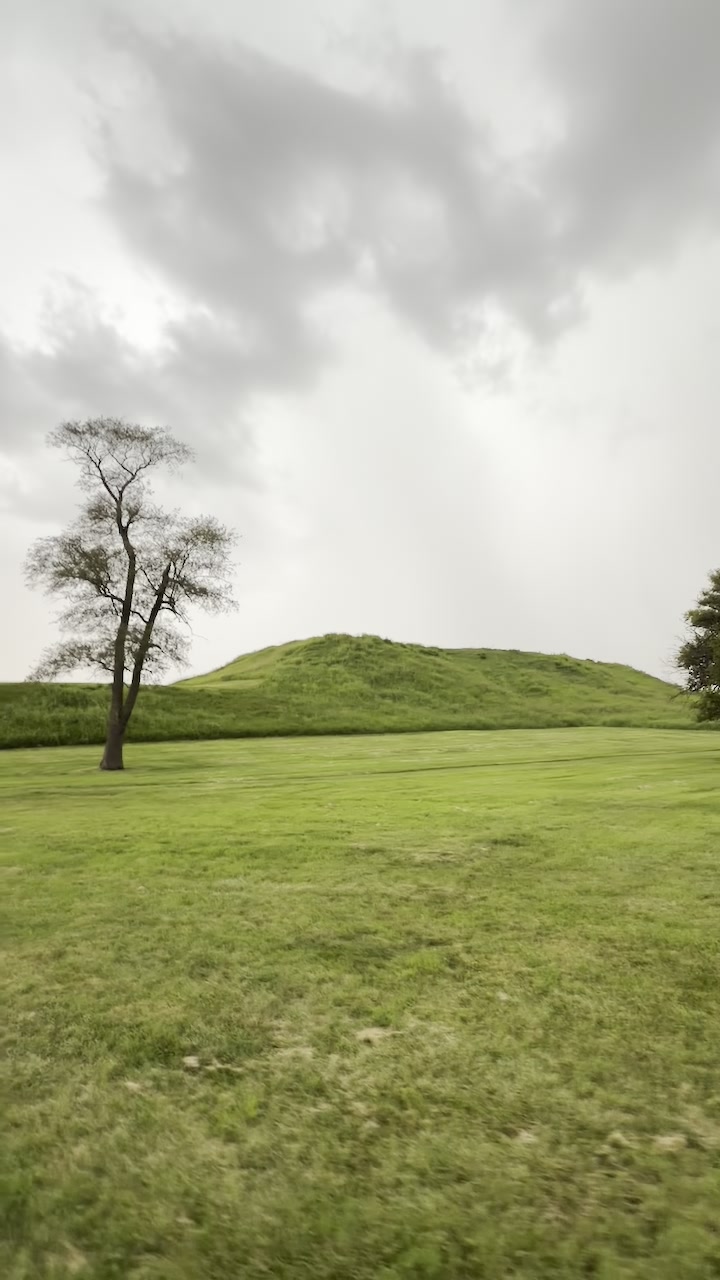
Just across the Mississippi from St. Louis are the remains of a city that once rivaled major European centers in population and scale. Cahokia was the largest pre-Columbian settlement north of Mexico, and its surviving earthworks preserve the footprint of a metropolis nearly a thousand years old.

Carondelet Park

Established in the 1870s, Carondelet Park is one of St. Louis's largest parks—a landscape of lakes, old trees and traces of the independent town that once stood nearby.

Cherokee Brewery

Cherokee Brewery once filled a block between Iowa and Ohio, with beer stored in deep underground lagering cellars. Most of the complex vanished, but its surviving stock house and remarkable cellars preserve a hidden layer of St. Louis brewing history.

Chouteau's Pond Beneath Union Station

The landscape around Union Station once looked radically different. Chouteau's Pond stretched through the city, powering mills before becoming polluted, drained and erased beneath urban development.

City Brewery / Charles G. Stifel Brewery

Charles G. Stifel's City Brewery grew into a substantial nineteenth-century brewing operation along North 14th Street near Howard, linking one of St. Louis's prominent German-American families to the city's brewing boom.

Clabber Alley

Clabber Alley was one of the crowded tenement enclaves north of downtown associated with poverty and the city's rough nineteenth-century street life.

Columbia Brewery / Falstaff Plant No. 5

At 20th and Madison, the Columbia Brewery became one of North St. Louis's great brewing landmarks before Falstaff bought the aging plant in 1948 and renamed it Plant No. 5.

Eads Bridge

When Eads Bridge opened in 1874, it was an engineering gamble on an enormous scale: the first bridge across the Mississippi at St. Louis and a pioneering use of structural steel.

Eliza Haycraft Property — Block 118

In March 1865 Eliza Haycraft purchased real estate in St. Louis city block 118 from Charles P. Chouteau. The property later became the subject of a lawsuit in which Haycraft alleged that the real estate was not free of encumbrances and that she had been forced to pay taxes against it.

Eliza Haycraft Property — Block 131

Eliza Haycraft’s will lists property in St. Louis city block 131, one of a series of downtown holdings showing how concentrated her real-estate portfolio had become in the commercial core of nineteenth-century St. Louis.

Eliza Haycraft's Final Home Site

Eliza Haycraft became one of antebellum St. Louis's most unusual fortunes, acquiring property before her death in 1871.

Eliza Haycraft’s Six Houses on Green Street

Eliza Haycraft’s 1867 will lists six houses and lots on the north side of Green Street between Seventh and Eighth Streets. The cluster shows that the woman remembered primarily as St. Louis’s most notorious madam had also assembled a substantial downtown real-estate portfolio.

Grant's Farm

Grant's Farm layers two famous American families onto one property: Ulysses S. Grant's nineteenth-century farmstead and the Busch family's twentieth-century estate and wildlife preserve.

Griesedieck Brewery Complex / Falstaff Plant No. 10

At Shenandoah and Lemp, generations of brewers used the same site before Griesedieck Brothers turned it into one of St. Louis's great breweries. Falstaff later made it Plant No. 10, while an older flooded lagering cave remained beneath the complex.

Horseshoe Lake

Horseshoe Lake is one of the defining landscape features of Carondelet Park, a small body of water folded into one of South St. Louis's oldest major parks.

Jefferson Barracks

Jefferson Barracks is one of the oldest military sites west of the Mississippi, a place where the history of the U.S. Army intersects with hospitals, epidemics and an enormous national cemetery.

Jefferson Barracks Cholera Monument

The cholera memorial at Jefferson Barracks recalls a nineteenth-century world in which disease was one of the greatest threats facing soldiers and civilians alike.

Kate Clark's Brothel

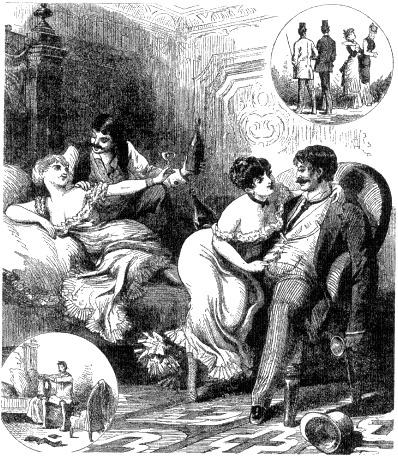
Madam Kate Clark operated one of the substantial houses associated with St. Louis's Gilded Age vice economy.

Laclede's Landing

Nine historic blocks beside the Mississippi preserve one of the clearest physical links between modern St. Louis and the river settlement that grew into the city.

Laclede's Landing Wax Museum

Among the brick warehouses and cobblestone streets of Laclede's Landing survives one of downtown St. Louis's strangest attractions: a traditional wax museum filled with celebrities, historical figures and monsters.

Lemp Brewery

Across Cherokee Street from the Lemp Mansion stands the surviving industrial heart of the Lemp fortune: a sprawling brewery complex that once shipped St. Louis lager around the world.

Lemp Mansion

The Lemp Mansion preserves the story of one of St. Louis’s great brewing dynasties—a family whose extraordinary success was followed by business collapse, multiple suicides, and a reputation that helped turn the house into one of the city’s best-known haunted landmarks.

Mary Hancock McLean’s First Private Practice — Scab Row

In 1885 Dr. Mary Hancock McLean tried to establish a private medical practice in St. Louis. Historical accounts say that she and Bertha Van Hoosen finally rented a room on a narrow section of Olive Street known as “Scab Row” after 46 other landlords refused them because they were women in medicine.

Mineral Springs Hotel — The Jasmine Lady

The historic Mineral Springs Hotel in Alton, Illinois, is associated with the legend of the Jasmine Lady. According to ghost stories, a woman died after falling down a staircase—some versions say she was pushed—and her presence is now announced by the scent of jasmine perfume. The death story and haunting are unverified folklore.

Minnie Kraedler's Brothel — Blood in a Brothel

The historic 105 Poplar Street site was associated with Minnie Kraedler and a violent episode in the city's nineteenth-century brothel district.

Morgan Street Vice District

The historic Morgan Street corridor was associated with nineteenth-century downtown vice during an era when prostitution operated openly in parts of St. Louis.

Mount St. Rose

The site associated with the former Mount St. Rose institution belongs to the largely vanished geography of tuberculosis care that once surrounded St. Louis.

Old Courthouse

The Old Courthouse witnessed some of St. Louis's most consequential legal history, including freedom suits that exposed the contradictions of a slave state at the gateway to the West.

Pigface — Greensfelder Park

The Pigface legend haunts the woods around Greensfelder Park near Eureka, Missouri. In local retellings, the creature’s story overlaps with tales of a Pigman and the construction of nearby Six Flags St. Louis. The creature and its supposed reaction to development belong to folklore, not documented history.

Poplar Street Vice District

Historic Poplar Street formed part of the city's landscape of brothels, saloons, cheap lodging, and riverfront vice.

Priscilla Henry's Brothels

Priscilla Henry operated brothels at 206 and 208 S. Sixth Street, a remarkable business story entangled with race, segregation, sex work, and Gilded Age St. Louis.

Square One Brewery's Historic Building

Square One Brewery & Distillery brews in a Lafayette Square building whose drinking history reaches back to 1883, including decades as an Anheuser-Busch-owned tavern and dance hall.

St. Louis City Hospital

The old City Hospital complex on Lafayette Avenue survived fire, a devastating tornado, decades of public medicine and years of abandonment before finding a new life.

St. Louis County Insane Asylum (Former)

The historic Dome Building on Arsenal Street began as the St. Louis County Insane Asylum in 1869, a public institution whose history mirrors changing ideas about mental illness, treatment and confinement.

Sublette Park and the Social Evil Hospital

Before Sublette Park became a neighborhood green space, the surrounding landscape was tied to the Social Evil Hospital and Female Hospital—institutions connected to St. Louis's controversial nineteenth-century regulation of prostitution and women's health.

Sugarloaf Mound

St. Louis once contained dozens of Indigenous earthworks. Nearly all were destroyed as the city expanded. Sugarloaf Mound survived.

The Levee and the Doggeries

The St. Louis levee was once crowded with steamboats, freight, workers, saloons, cheap drinking establishments, and the rough businesses Mark Twain called 'doggeries.'

The Lost Arsenal Island

Arsenal Island once occupied the Mississippi near the St. Louis Arsenal. Like many river islands, it was never as permanent as the maps that tried to pin it down.

The Lost Robert Koch Hospital

Robert Koch Hospital belonged to the era when cities isolated patients with tuberculosis and other contagious diseases in specialized institutions away from ordinary hospital wards.

The Naked Truth Statue

The Naked Truth is one of St. Louis's strangest public monuments: a 1914 bronze figure commissioned to honor German-American newspaper editors and funded in large part by Adolphus Busch.

Wildcat Chute

A vanished North St. Louis enclave remembered for overcrowded tenements, poverty, vice, and disease.

William Greenleaf Eliot Home Site

William Greenleaf Eliot was a minister, educator, abolitionist, and civic reformer whose St. Louis work included opposition to the city's Social Evil ordinance.

Zombie Road

A spooky trail were multiple urban legends lurk

© 2026 Ben Swoboda

bottom of page